MLB Prop Betting
MLB Strikeout Prop Bets and UK Betting Edge Analysis
 Available in US
Table of Contents
- The Five Numbers That Drive Every K-Prop Decision
- Why MLB Strikeout Props Are the Sharpest Edge in Baseball Betting
- How Pitcher Strikeout Over/Under Props Work
- The Three Metrics That Predict Strikeout Outcomes
- Reading the Matchup: Lineup K-Rates and Handedness Splits
- Identifying Value: Moneyline, Game Total, and Line Correlation
- The Laddering Strategy: Alt Lines for Asymmetric Payoffs
- External Factors — Weather, Venue, and Umpire Tendencies
- Bankroll Discipline for Strikeout Props
- Betting MLB Strikeouts from the UK: Odds, Platforms, and Regulation
- Frequently Asked Questions About MLB Strikeout Prop Bets
By MLB Prop Betting Strategist
The Five Numbers That Drive Every K-Prop Decision
- MLB strikeout rates have surged 67% since 2000 (K/9 rising from 5.15 to above 8.6), creating wider inefficiencies in K-prop markets than in moneyline or totals.
- Three metrics form your evaluation core: SwStr% above 12%, CSW% above 30%, and K% for skill assessment — backed by K/9 for volume context.
- Opposing lineup K-rate is half the equation. Early 2026 data shows Oakland (37.8% K-rate) and Chicago White Sox (~36%) as prime over targets.
- The laddering strategy — stacking bets across alt lines at +150, +300, and +750 — turns high-conviction plays into asymmetric payoffs with capped downside.
- Umpire strike-zone tendencies swing game K-totals by nearly three strikeouts (14.8 average vs 17.5+ for wide-zone umpires) and remain underpriced by most books.
Why MLB Strikeout Props Are the Sharpest Edge in Baseball Betting
Three years ago, I watched a mid-rotation lefty face the worst-striking-out lineup in the American League and still went under on his strikeout prop. The line was set at 5.5, the matchup screamed over, and I lost. Not because the analysis was wrong — his swinging strike rate was elite, the opposing offence had been fanning at a 30% clip all month — but because I missed a single variable: the home plate umpire had the tightest strike zone in baseball that season. That loss cost me one unit. More importantly, it taught me that strikeout props reward layered thinking in ways that moneyline and totals never do.
I have spent 11 years dissecting pitcher performance metrics, line movement, and matchup-driven value in MLB strikeout prop markets. Over that time, the landscape has shifted dramatically. League-wide K/9 in Major League Baseball has climbed from 5.15 in 2000 to above 8.6 in recent seasons — a 67% surge that has transformed how sportsbooks price these markets and how sharp bettors attack them. Strikeouts are no longer an occasional outcome; they are the dominant event in modern baseball, and prop markets built around them carry inefficiencies that more traditional bet types have long since ironed out.
What is a strikeout prop bet? — A strikeout prop (also called a K prop) is a proposition bet on how many strikeouts a specific pitcher will record in a game. The sportsbook sets a line — say 6.5 — and you wager on whether the pitcher finishes with more (over) or fewer (under) than that number. Unlike moneyline or run-total bets, K props isolate a single measurable skill: the pitcher’s ability to miss bats.
The sports betting market is booming on both sides of the Atlantic. US sports betting revenue hit a record $16.96 billion in 2025, up 22.8% year on year. In the UK, the sports betting sector generated GBP 2.48 billion in annual gross gambling yield in the same period. Within that expansion, the proliferation of prop bets and same-game parlays has been one of the key growth drivers, pulling new bettors into markets that were once niche territory.
MLB analyst Michael Rathburn put it plainly: “My favourite baseball bet is the strikeout prop. These lines are not as sharp as traditional money lines or over/unders. If you dig and understand what is not built into the lines, you can exploit them for profit.” That sentiment captures what makes K props different. Moneyline markets attract the sharpest action in baseball. Totals are heavily modelled by syndicates. But strikeout props sit in a middle ground — liquid enough to bet, soft enough to beat — where a disciplined process generates consistent edge.
This guide is that process. I will walk you through the mechanics of K props, the three metrics that matter most, how to read matchups and line correlations, the laddering strategy that unlocks asymmetric payoffs, and the external factors — weather, venue, umpire — that most bettors ignore entirely. If you are betting from the UK, there is a dedicated section covering odds formats, platform access, and the regulatory changes that affect how you fund your account.
Every section builds on the one before it. By the end, you will have a repeatable framework for evaluating any strikeout prop on any day of the MLB season — not a list of picks that expires tonight, but a method that compounds over a full 162-game grind.
How Pitcher Strikeout Over/Under Props Work
The first strikeout prop I ever placed was a disaster — not because I lost, but because I won without understanding what I had actually bet on. I backed the over on a starter’s K line, the pitcher threw seven innings and struck out eight, and I collected. Easy. Except the line had been set at 5.5, and I had not checked whether half-strikeouts were even possible. That sounds trivial, but the distinction between whole-number and half-number lines changes how you size bets, how you assess risk, and whether the over or under carries structural advantage.
Prop bet — short for proposition bet, a wager on a specific statistical outcome within a game rather than the game result itself. Strikeout props are the most popular pitcher prop in MLB betting.
Over/under — also written as O/U, this is the line set by the sportsbook. You bet on whether the pitcher’s actual strikeout total finishes above (over) or below (under) that number.
Here is how it works in practice. The sportsbook’s traders look at a pitcher’s recent performance, his seasonal averages, the opposing lineup’s tendency to strike out, and several market factors. They land on a number — let us say 6.5 strikeouts. You then decide: will this pitcher record 7 or more (over), or 6 or fewer (under)? The .5 eliminates the possibility of a push, meaning every bet resolves as a win or a loss.
Some books also offer whole-number lines — 6 or 7, for example — where a push is possible if the pitcher lands exactly on the number. Whole-number lines are less common in the UK market but appear regularly on US-facing platforms. I generally prefer the clarity of half-number lines, though whole-number overs can offer a small edge when you believe the pitcher is likely to land near the posted total.
Standard K-prop pricing
A typical strikeout prop is priced at -110 on both sides in American format. That translates to 1.91 in decimal odds. You risk GBP 110 to win GBP 100 (or equivalently, a GBP 100 stake returns GBP 191 including the original wager). The sportsbook’s margin — the vig — is baked into those identical prices. Standard K-props usually carry odds of -110 on both sides, while alternative lines offer prices like +150 for the first tier above the base line, +300 for the second, and +750 for the third.
Strikeout props typically post between 12 and 18 hours before first pitch, though the exact timing varies by platform. Lines for marquee matchups — aces against division rivals, nationally televised games — tend to open earlier and attract sharper early action that moves the number before casual bettors even see it. If you are betting from the UK, that means lines often appear during the early morning hours, giving you a window to act before the US market wakes up and hammers value off the board.
One mechanical detail that catches newer bettors: only strikeouts recorded while the pitcher is the pitcher of record count toward the prop. If a starter is pulled after four innings and a reliever racks up six Ks, those relief strikeouts do not add to the starter’s prop total. The bet lives and dies with the named pitcher’s individual performance, which is precisely why pitch count awareness matters so much — a topic I cover in depth later in this guide.
Understanding the mechanics is the floor. The real question is not how K props work but where the line is wrong — and answering that requires a framework built on the right data.
Before you can spot a mispriced line, you need to know which numbers to trust. Three metrics do the heavy lifting.
The Three Metrics That Predict Strikeout Outcomes
I used to evaluate every pitcher the same way: check his K/9, glance at the matchup, place the bet. My results were mediocre. Then I started tracking swinging strike rate and called-strike-plus-whiff percentage alongside K/9, and my hit rate jumped noticeably within three months. The difference was not that I discovered some hidden metric — all three are freely available on Baseball Savant and FanGraphs. The difference was learning which metric answers which question and when one overrides the others.
K/9
Strikeouts per nine innings pitched. The most widely cited strikeout metric. League average sits around 8.6 in the current era. Quick to read, easy to compare across pitchers, but can be distorted by innings-pitched totals and defensive context.
SwStr%
Swinging strike rate — the percentage of total pitches that produce a swing-and-miss. Elite pitchers post SwStr% above 12%. This metric isolates the pitcher’s ability to generate whiffs independent of umpire calls, defensive support, or game context.
CSW%
Called strikes plus whiffs as a percentage of total pitches. Combines the pitcher’s ability to get called strikes on the edge of the zone with his whiff generation. Elite threshold: above 30%. The most holistic single-number measure of a pitcher’s dominance per pitch.
K/9 tells you what a pitcher has done.

| Feature | K/9 | K% |
|---|---|---|
| What it measures | Strikeouts per nine innings pitched | Strikeouts per batter faced |
| Denominator | Innings pitched | Plate appearances |
| Distorted by | Innings-eater pitchers who go deep but face many batters | Short outings where sample is small |
| Best use case | Quick historical comparison across eras | Evaluating true strikeout skill per opportunity |
| Prop relevance | Useful as a first filter; not sufficient alone | More accurate for projecting K total in a given outing |
K% — strikeouts as a percentage of batters faced — deserves a spot in the conversation alongside K/9. The two often move together, but they diverge in revealing ways. A pitcher who goes seven innings and faces 28 batters with eight strikeouts posts a 10.29 K/9 but only a 28.6% K%. Another pitcher who goes five innings, faces 20 batters, and strikes out seven posts a 12.6 K/9 but a 35% K%. For prop betting, the second pitcher’s rate is more impressive per opportunity, but the first pitcher’s extra innings give him more chances to accumulate raw Ks. This is exactly why I look at both: K% for skill assessment, K/9 for volume context, and then I use SwStr% and CSW% to decide whether the underlying process supports the surface numbers.
Logan Webb illustrates the point. In 2025, Webb posted a career-best 9.74 K/9 across 207.0 innings, leading the National League in both strikeouts and innings pitched. Those numbers made him a frequent target for K-prop overs. But the real signal was his SwStr% and CSW%, which confirmed that his raw totals were driven by genuine swing-and-miss stuff rather than volume alone. When I see a pitcher whose K/9 spikes but whose swinging strike rate stays flat, I fade the hype. When all three metrics align upward, I lean over aggressively.
Elite K-pitchers typically post SwStr% above 12% and CSW% above 30%. Those are the thresholds I use as a starting gate. If a pitcher clears both, he enters my evaluation pipeline. If he falls short on either, I need a compelling matchup reason to consider the over. For a deeper exploration of whiff-rate thresholds and how to source the data, the swinging strike rate betting guide covers everything from pitch-mix effects to free data tools.
Reading the Matchup: Lineup K-Rates and Handedness Splits
A pitcher does not throw in a vacuum. I once backed an elite arm against what I assumed was a middling offence, only to realise after first pitch that the lineup had been reshuffled with three bench players who rarely struck out. The starter went under. That taught me a lesson I repeat to myself before every bet: half the strikeout equation lives on the other side of the plate.
Opposing lineup K-rate is the single most undervalued input in casual K-prop analysis. Sportsbooks factor it in — they have to — but the market often underreacts to extreme lineup compositions, particularly early in the season when rosters are volatile and sample sizes are thin. At the start of the 2026 season, the Oakland Athletics recorded a staggering 37.8% K-rate through their first 180 plate appearances, the worst mark in baseball. The Chicago White Sox were not far behind at roughly 36%. When an elite-SwStr% pitcher draws one of these lineups, the over becomes a near-automatic play, and yet the posted line rarely reflects the full extent of the mismatch.
Oakland Athletics
37.8% K-rate (early 2026) — highest in MLB. A primary target for pitcher K-prop overs.
Chicago White Sox
Approximately 36% K-rate (early 2026) — second worst in baseball. Another reliable over-trigger when facing high-whiff arms.
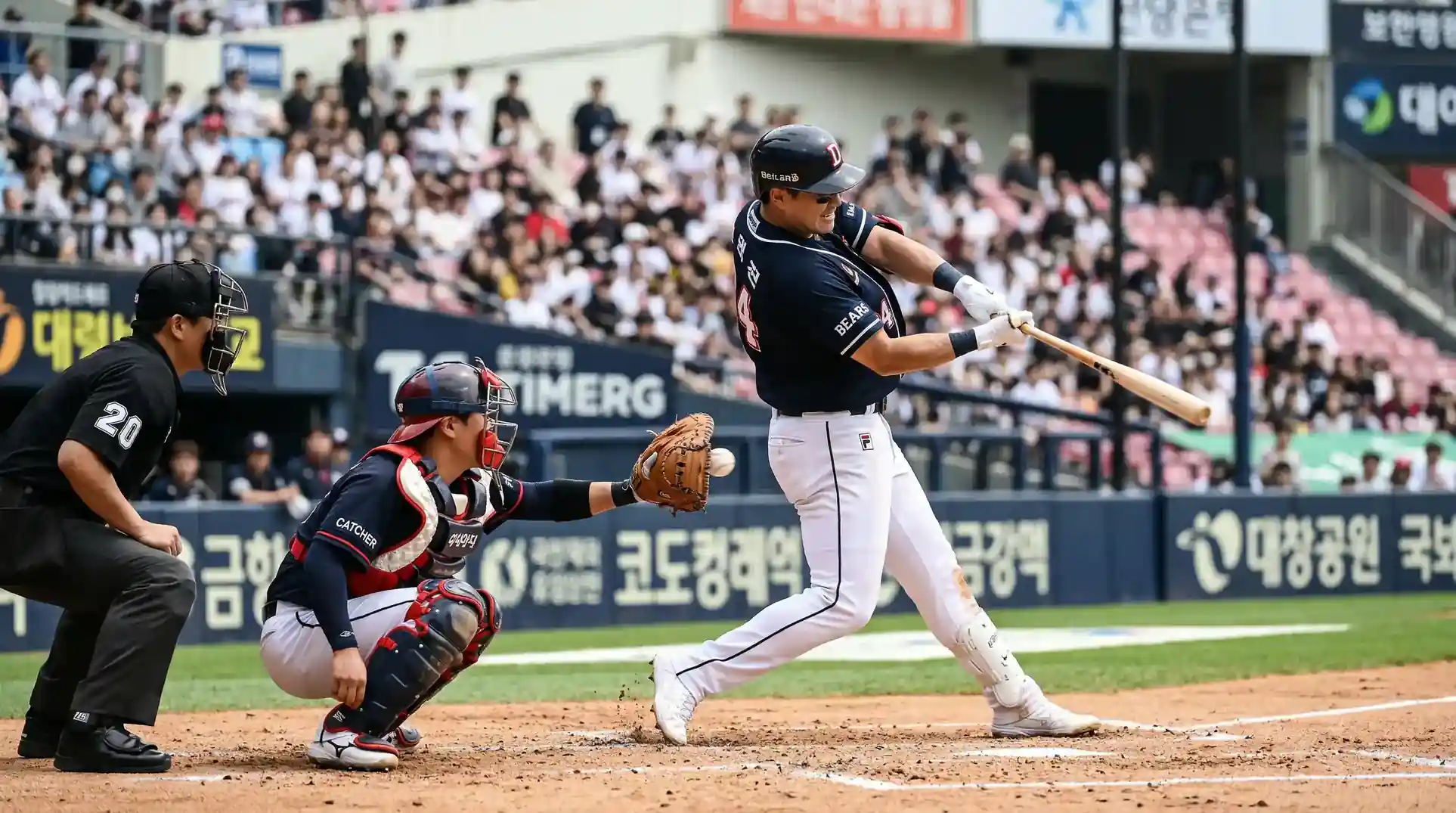
Beyond team-level rates, handedness splits
Jazz Chisholm Jr. struck out in 53.8% of his career at-bats against Logan Webb — seven strikeouts in just 13 plate appearances. Batter-vs-pitcher history in small samples is noisy, but extreme numbers like this flag matchups where the pitcher’s arsenal specifically exploits a hitter’s weaknesses.
Batter-vs-pitcher data is tempting but dangerous. A 13-at-bat sample, like Chisholm vs Webb, tells a dramatic story, yet it lacks the statistical power to be predictive on its own. I treat BvP numbers as a tiebreaker, not a foundation. If the team-level K-rate and the pitcher’s metrics already point toward the over, a favourable BvP cluster among the lineup’s middle-order hitters reinforces the play. If the case rests entirely on three batters having struck out a lot in 40 combined plate appearances, I pass.
Lineup volatility is the third dimension. MLB managers rotate players more aggressively than casual fans realise — rest days, minor-league callups, and Sunday swaps all reshuffle the batting order. A lineup posted at 10 AM local time can look different by game time. I always verify the lineup against the team’s official social channels or a reliable aggregator within 90 minutes of first pitch. If a key low-K bat has been replaced by a high-K bench player, the over gains value. If the reverse happens — a high-K regular sits and a contact-oriented substitute enters — the over weakens. For a full breakdown of which teams and divisions are most prone to striking out, the strikeout-prone lineups guide covers rankings, platoon splits, and lineup volatility patterns across MLB.
You have the pitcher’s metrics and the opposing lineup’s tendencies. Now the question becomes: what is the market telling you about this game, and does it confirm or contradict your K-prop thesis?
Identifying Value: Moneyline, Game Total, and Line Correlation
Here is a trick that took me years to figure out on my own, and I am still annoyed nobody told me sooner. The moneyline and the game total are not separate markets from the strikeout prop — they are upstream signals that reveal how the entire game is being priced. If you ignore them, you are evaluating the K prop in isolation. If you read them correctly, they hand you a market-implied context that either supports or undermines your bet.
Michael Rathburn, whose K-prop approach posted a 19-6 record (76% win rate) during one tracked season, describes the logic cleanly: “I like to use the money line plus the total for the game to identify market value in a strikeout prop. The higher the favourite and lower the total present a favourable situation for the starting pitcher strikeout prop.” The reasoning is straightforward. A heavy favourite is expected to win, which means his team is expected to hold a lead, which means the manager has less reason to pull the starter early. A low game total means the market expects fewer runs, which implies dominant pitching — fewer baserunners, more complete at-bats that end in strikeouts rather than balls in play.
Moneyline + total correlation in action
Suppose a starting pitcher’s team is a -180 favourite (1.56 decimal), and the game total is set at 7.0. Compare this to a second scenario: the same pitcher’s team is a -110 pick (1.91 decimal) with a game total of 9.5. In the first scenario, the market expects a tight, pitching-dominated game with the starter likely to work deep into the outing. In the second, a high-scoring slugfest where the starter may be pulled early or give up contact. The K-prop over is structurally more favourable in the first scenario, even if the pitcher’s individual metrics are identical.
I use this correlation as a filter, not a system. If a pitcher clears my metric thresholds (SwStr% above 12%, CSW% above 30%) and faces a high-K lineup, I then check the moneyline and game total. If the game environment confirms the thesis — heavy favourite, low total — I size up. If the game total is elevated or the pitcher’s team is an underdog, I either size down or skip the bet entirely. The correlation does not generate bets on its own; it validates or invalidates bets I have already identified through pitcher and matchup analysis.
Expected value is the concept that ties everything together. In simple terms, you compare the probability you assign to the over hitting against the implied probability embedded in the sportsbook’s odds. If your projection exceeds the market’s implied probability by a meaningful margin, the bet is positive expected value (+EV). If not, you pass. Understanding how sportsbooks build their pitcher strikeout over/under lines — and where the vig hides — is essential to making that comparison accurately.
The discipline here is resisting the urge to bet a matchup that looks good on paper but does not offer enough edge once the vig is accounted for. A K prop priced at -110 carries an implied probability of roughly 52.4%. If your model gives the over a 55% chance, you have an edge — but a thin one. If your model gives it 60%, the edge is substantial. The moneyline-total correlation helps you distinguish between the two by surfacing game environments where the pitcher’s ceiling is most accessible.
The Laddering Strategy: Alt Lines for Asymmetric Payoffs
Most bettors place a single wager on the standard K-prop line and move on. I did the same for years. Then I discovered alt lines and the laddering strategy, and it fundamentally changed how I structure my highest-conviction plays. The concept is simple; the execution requires restraint.
Alt lines — short for alternative lines — are variations on the standard strikeout prop that move the posted number up or down in exchange for adjusted odds. If the standard line is 6.5 at -110 (1.91 decimal), an alt line might offer over 7.5 at +150 (2.50 decimal), over 8.5 at +300 (4.00 decimal), and over 9.5 at +750 (8.50 decimal). Each step above the standard line carries longer odds because the outcome becomes less likely. But “less likely” does not mean “unlikely” — and that is where the edge hides.
Alt-line laddering tiers
Standard line: over 6.5 Ks at -110 (1.91 decimal). Tier 1: over 7.5 Ks at +150 (2.50 decimal). Tier 2: over 8.5 Ks at +300 (4.00 decimal). Tier 3: over 9.5 Ks at +750 (8.50 decimal). Each tier reduces your probability of winning but increases the payout per unit risked. Laddering means placing separate bets at two or three tiers simultaneously, with decreasing stake sizes as you move up the ladder.
Alt lines look generous because the payouts grow faster than the odds feel. Pricing each tier against a strikeout distribution shows which rungs are genuinely long and which just look that way — and the answer is rarely the ones in the middle.
| Rung | Chance | Fair price | Offered | Edge |
|---|---|---|---|---|
| 7+ Ks — base line | 50,01 % | 2,00 | 1,91 | −4,49 % |
| 8+ Ks — tier 1 | 35,22 % | 2,84 | 2,50 | −11,94 % |
| 9+ Ks — tier 2 | 22,90 % | 4,37 | 4,00 | −8,40 % |
| 10+ Ks — tier 3 | 13,77 % | 7,26 | 8,50 | +17,02 % |
A pitcher’s strikeout total behaves close to a Poisson count, so fixing the expected number fixes the whole distribution and every rung can be priced from it. Setting the expectation at 6,67 makes the base line a coin flip, which is what a two-sided price near evens implies once the margin is stripped out. Everything above follows from that single number. Two observations worth carrying into a real slate. The first concerns the claim that hitting the base line leaves you net positive because the standard bet covers the alt-line losses. That is arithmetically true but slimmer than it sounds: at exactly seven strikeouts the ladder returns 1,910 against 1,750 staked, a gain of 0,160 units. The same seven strikeouts on a single unit at the base line return 0,910. The ladder converts a solid win into a marginal one, and only pays off properly when the pitcher goes well past the line. The second is that the tiers are not equally priced. The first two rungs above the base carry the widest margins, which is where most laddering stakes land. The top rung is often the only one worth taking, because books price genuinely long shots more generously relative to their true chance. If the ladder appeals, the version supported by this arithmetic is a base bet plus the top rung, skipping the middle. One important caveat on the model. Real strikeout totals are slightly overdispersed compared with Poisson, because innings pitched varies and a pitcher pulled after four innings truncates the count while one who goes eight extends it. Overdispersion fattens both tails, which raises the true chance of the upper rungs above what this calculation shows. Nudge the expected strikeouts up by two or three tenths to approximate that effect and watch how quickly the upper tiers improve. More in the guides to alt lines and laddering, simulation models and how lines are set. 18+; GambleAware.
Laddering works by distributing risk across the payout curve. You stake your standard unit on the base over, half a unit on Tier 1, and a quarter unit on Tier 2. If the pitcher reaches seven strikeouts, you win Tier 0 and lose Tiers 1 and 2 — a net-positive result because the base bet covers the smaller alt-line losses. If the pitcher reaches nine, you win all three tiers, and the +300 payout on Tier 2 amplifies your return significantly. The structure creates asymmetric payoffs: limited downside on a mediocre K-day, outsized upside on an explosive one.
Laddering is not a system for every game. I reserve it for situations where all filters align: elite pitcher metrics, a high-K opposing lineup, a game environment that supports a deep outing (heavy favourite, low total), and confirmed umpire/weather conditions. When only two of four filters clear, I stick with the standard line. When all four flash green, the ladder goes up.

There is a psychological benefit to laddering that pure EV calculations miss. On a standard K-prop, you either win or you lose. The emotional swing is binary. On a laddered play, a pitcher who racks up seven Ks delivers a solid win, and every additional strikeout beyond that triggers another tier. You are rooting for the same outcome but experiencing it in stages, which keeps decision-making cleaner during live action. I have found that bettors who ladder their highest-conviction plays make fewer impulsive in-game bets because the structure channels their attention toward patience rather than reaction.
External Factors — Weather, Venue, and Umpire Tendencies
I lost a bet in April a few seasons back because the temperature at first pitch was 4 degrees Celsius. The pitcher I backed had been dominant all spring training, his SwStr% was humming above 13%, and the opposing lineup struck out in nearly a third of their plate appearances. Everything pointed to the over. But cold air changes the physics of pitching in ways that most prop bettors never consider. Decreased grip strength means reduced spin rate, which means breaking balls do not bite as sharply, which means fewer swings-and-misses. That is not speculation — it is aerodynamics applied to a 140-gram baseball.

The Fantasy Info Central K-prediction methodology notes it directly: "Cold/dry weather makes it harder to grip the ball. Decreased spin rate and/or control tends to reliably drop strikeout rates." I now treat temperature as a hard filter. Below 10 degrees Celsius at game time, I am more cautious on overs. Above 20, I treat weather as neutral. Between 10 and 20, I check the humidity and wind conditions before deciding. Wind direction matters less for strikeouts than for home runs, but strong gusts can disrupt pitcher mechanics and batter timing in unpredictable ways.
Venue is the second external lever. Not every ballpark produces strikeouts at the same rate. Park factors — a composite of altitude, mound dimensions, batter's eye design, and foul territory — create measurable differences in K outcomes from stadium to stadium. I carry a mental shortlist of high-K and low-K venues and adjust my projections accordingly. A pitcher throwing in a stadium that suppresses contact is working with a tailwind; one throwing in a hitter-friendly park faces a headwind that the market may not fully price in.
The gap between umpires with the widest and tightest strike zones is enormous. High-K umpires preside over games averaging 17.5 or more strikeouts, compared to a league-wide average of 14.8 across all umpires. That is a difference of nearly three strikeouts per game — enough to swing a prop line from under to over on its own.
Umpire tendencies are the most overlooked factor in K-prop analysis. The Fantasy Info Central team quantifies it: "Umpire tendencies to call strike on borderline pitches play a statistically significant role with strikeout prop bets. In a typical game, there are 5-10+ swing pitches that could be called either way." A generous zone means more called strikes, more favourable counts for the pitcher, and ultimately more strikeouts. A tight zone means more balls, longer at-bats, and fewer Ks.
How to check the umpire assignment — Umpire assignments for MLB games are typically released one to two days before the game. Several free tools display historical K-rates by umpire, allowing you to see whether the assigned umpire runs hot or cold on strikeouts. Cross-referencing the umpire's zone tendencies with your pitcher's pitch-mix profile — specifically, whether the pitcher works the edges of the zone or attacks the middle — adds precision to the adjustment.
I weight these three external factors in descending order: umpire, venue, weather. Umpire impact is the most consistent and the most quantifiable. Venue effects are stable across seasons but require knowing which parks favour Ks. Weather is the most volatile — relevant on cold or windy days, negligible on mild ones. When all three align in favour of the over (wide-zone umpire, high-K park, warm weather), the bet gains a structural boost that compounds with strong pitcher metrics and a favourable matchup. When one or more factors oppose the over, I reduce my confidence proportionally.
Bankroll Discipline for Strikeout Props
I know a bettor who hit 62% on K props over a three-month stretch and still lost money. His problem was not analysis — it was staking. He would put five units on a play he loved and one unit on a play he merely liked, and the five-unit losses wiped out weeks of disciplined one-unit wins. Bankroll management is not the exciting part of sports betting, but it is the part that determines whether a good process translates into a profitable result.
The core principle is straightforward: define a unit size and stick to it. A unit should represent a fixed percentage of your total bankroll — typically between 1% and 3%. If your bankroll is GBP 1,000, one unit is GBP 10 to GBP 30. That range protects you from ruin during inevitable losing streaks while leaving enough upside to compound during winning runs. I use 2% as my default and only flex to 3% on laddered plays where all four filters align (elite metrics, high-K lineup, favourable game environment, supportive external factors).
Pre-bet bankroll discipline check
- Have I defined my unit size as a fixed percentage of my current bankroll?
- Am I risking more than 3% of my bankroll on any single K-prop bet?
- Have I tracked today's total exposure across all pending bets, including parlays?
- Am I increasing stake size because of a recent winning streak rather than a stronger edge?
- Have I set a daily or weekly loss limit that triggers a pause in betting activity?
- Am I betting this prop because the analysis supports it, or because I want action?
The sheer volume of daily K-prop markets creates a trap that is easy to fall into. On a full MLB slate, there can be 15 or more starting pitchers with K-prop lines. The temptation is to bet five, six, seven games because you "see edge" in all of them. In practice, genuine edge exists in two to three games per day at most. I cap my daily K-prop exposure at three plays, and I enforce that cap even when the slate looks rich. Discipline is not about willpower in the moment; it is about rules you set when you are thinking clearly.
Losses are inevitable. A 60% hit rate — which would be exceptional over a full season — means you lose 40% of the time. A losing week does not mean your process is broken. A losing month might. The key is tracking results rigorously, reviewing weekly, and adjusting only when the data suggests a systematic error rather than variance. Building a repeatable strikeout prop strategy with defined filters and a results log is what separates recreational bettors from profitable ones.
Betting MLB Strikeouts from the UK: Odds, Platforms, and Regulation
When I started betting MLB props from the UK a decade ago, finding a platform that even listed pitcher strikeout lines required genuine effort. The market has changed radically since then. The range of American sports markets available to British punters has expanded year on year, driven by a UK gambling sector that continues to grow in both revenue and product breadth. Andrew Rhodes, CEO of the UK Gambling Commission, noted at the ICE World Regulatory Briefing that operators are seeing a "widening out of the sports offering in particular, with sports beyond the traditional horseracing and football growing in use, such as cricket, basketball, NFL and a host of other US-based sports." Baseball is part of that wave.
Decimal vs American odds — UK sportsbooks display odds in decimal format (e.g. 1.91), while most MLB betting content online references American format (e.g. -110). To convert: for negative American odds, divide 100 by the absolute value and add 1. So -110 becomes (100/110) + 1 = 1.91 decimal. For positive American odds, divide the odds by 100 and add 1. So +150 becomes (150/100) + 1 = 2.50 decimal. For a deeper look at how to read, compare, and extract value from MLB strikeout odds across UK-available platforms, that dedicated guide covers pricing mechanics in full.
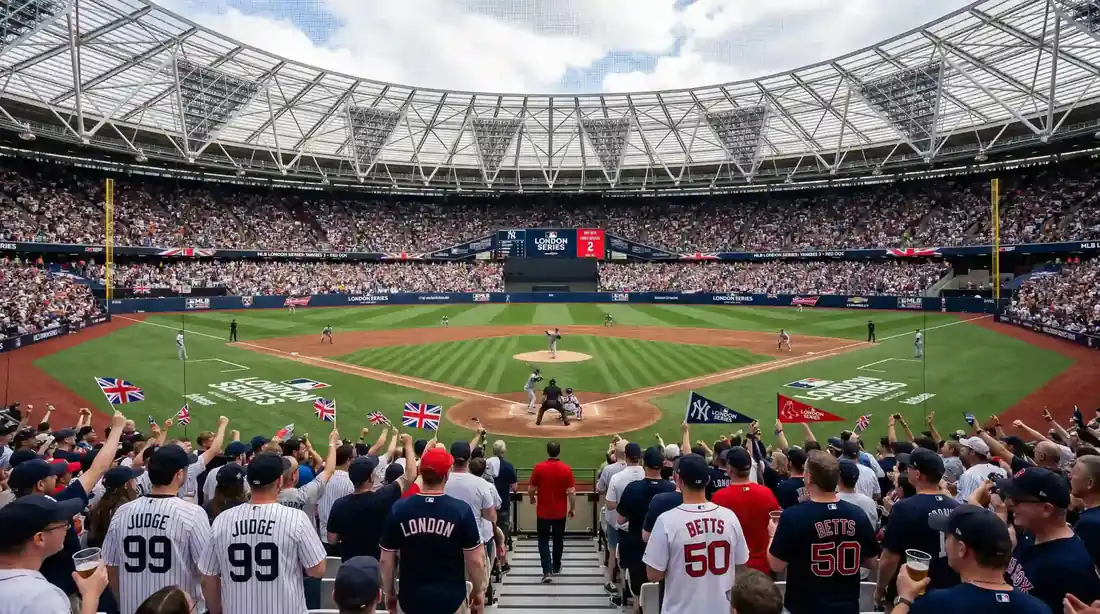
The MLB London Series has been a catalyst for UK engagement with baseball. The 2023 series between the Cardinals and Cubs attracted over 55,000 spectators across two games, with 71% of attendees being UK residents. Merchandise sales in the UK surged 43% after the event, and MLB's UK-based social channels saw subscriber growth of 133%. Those numbers signal real demand, and where demand goes, betting markets follow. UK-licensed platforms now offer K-prop lines for most MLB games, not just marquee matchups.
Regulatory context matters for how you fund and manage your account. The UK Gambling Commission lowered its financial verification threshold in February 2025, dropping the trigger from GBP 500 to GBP 150 in net deposits over a 30-day period. Once you cross that threshold, operators must run affordability checks before allowing further deposits. This does not affect your ability to bet on K props specifically, but it changes how you plan your bankroll deposits. If you are funding an account to bet regularly through the MLB season, you will likely hit the GBP 150 threshold within the first week or two, and the verification process can temporarily pause your ability to deposit. Planning ahead — depositing in larger but less frequent tranches and having documentation ready for affordability checks — avoids disruptions mid-slate.
The GBP 150 net-deposit threshold applies to net deposits — deposits minus withdrawals — over a rolling 30-day window. If you deposit GBP 200 and withdraw GBP 100 in the same period, your net deposit is GBP 100, which falls below the threshold. Strategic withdrawal timing can delay the trigger, but the checks will eventually apply to any regular bettor. Factor this into your bankroll management plan at the start of the season.
One practical advantage UK bettors have is timing. MLB games typically start between 17:00 and 03:00 UK time. K-prop lines often post during UK morning hours, 12 to 18 hours before first pitch. That gives you a window to analyse the slate, place your bets, and lock in value before the US-based market wakes up and starts hammering the lines. I do most of my K-prop research between 08:00 and 11:00 UK time, place bets by noon, and then check lineups one final time around 90 minutes before first pitch to confirm no late changes have undermined my thesis.
If you are new to baseball betting from the UK, the learning curve is steeper than switching from football to rugby — the sport's rhythms, the statistical language, and the volume of daily games all feel foreign at first. But K props are actually one of the more accessible entry points. You are not trying to predict which team wins or how many runs are scored. You are answering one question: will this specific pitcher strike out more or fewer batters than a single number? That clarity of focus makes the learning curve manageable and the analytical process transferable.
Frequently Asked Questions About MLB Strikeout Prop Bets
What are MLB strikeout prop bets and how do they work?
A strikeout prop bet is a wager on whether a specific pitcher will record more (over) or fewer (under) strikeouts than a number set by the sportsbook. The line is typically a half-number like 6.5 to eliminate pushes. Only strikeouts recorded by the named pitcher count — relief pitcher Ks are excluded. You win the over if the pitcher reaches 7 or more, and you win the under at 6 or fewer. Odds are usually set near -110 (1.91 decimal) on both sides, with the sportsbook's margin built into the pricing.
What is the best metric to evaluate a pitcher's strikeout potential — K/9 or K%?
Neither metric alone is sufficient. K/9 (strikeouts per nine innings) gives volume context — how many Ks a pitcher accumulates over a full outing. K% (strikeouts per batter faced) measures strikeout skill per opportunity, which is more stable and predictive. For prop betting, I use K% as the primary filter for skill and K/9 as a secondary check for volume potential. The real edge comes from adding SwStr% (swinging strike rate) and CSW% (called strikes plus whiffs) to confirm that the surface numbers reflect genuine swing-and-miss ability rather than statistical noise.
How does the opposing team's lineup affect strikeout props?
The opposing lineup's strikeout rate is at least as important as the pitcher's own metrics. Teams with high K-rates — such as the Oakland Athletics, who recorded a 37.8% K-rate early in 2026 — create favourable environments for pitcher K-prop overs. I evaluate team-level K% first, then check handedness splits (left-handed pitchers tend to strike out right-handed batters at higher rates) and lineup composition (bench players and callups typically strike out more than regular starters). Confirming the actual posted lineup before betting is essential, as late changes can shift the matchup significantly.
What is the laddering strategy for strikeout props?
Laddering (also called the escalator strategy) involves placing separate bets across multiple alt lines at descending stake sizes. You might put one full unit on the standard line at -110, half a unit on the first alt line at +150, and a quarter unit on the second alt at +300. If the pitcher exceeds expectations, the higher-tier bets amplify your return. If he merely clears the standard line, the base bet covers the smaller alt-line losses. The result is a skewed risk profile: you sacrifice a small amount of total outlay on the upper tiers in exchange for dramatically larger returns when the pitcher has a dominant outing. I only ladder when all analytical filters align.
How do weather and ballpark factors influence strikeout totals?
Cold, dry weather reduces pitcher grip strength and spin rate, which decreases whiff generation. I treat temperatures below 10 degrees Celsius as a caution flag for overs. Ballpark factors also matter — altitude, mound dimensions, and batter's eye design create measurable venue-to-venue differences in strikeout rates. Some parks consistently produce more Ks than others. I factor weather in as a same-day variable and venue as a structural constant, adjusting my projection before comparing it to the posted line.
What role does swinging strike rate play in predicting strikeouts?
SwStr% — the percentage of total pitches that produce a swing and miss — is the most predictive single metric for future strikeout performance. Unlike K/9 or K%, which reflect outcomes that depend on game context, SwStr% isolates the pitcher's raw ability to miss bats. Elite pitchers post SwStr% above 12%. I use it as a primary filter: if a pitcher's swinging strike rate clears that threshold and his CSW% is above 30%, he enters my evaluation pipeline. If either falls short, I need a strong matchup-specific reason to back the over.
How do you calculate expected value on a strikeout prop?
Expected value (EV) compares your estimated probability of an outcome against the implied probability priced into the odds. First, convert the sportsbook's odds to an implied probability — at -110, that is approximately 52.4%. Then estimate your own probability using pitcher metrics, matchup data, and external factors. If you project the over at 58%, your edge is the difference: 58% minus 52.4% = 5.6% positive EV. Multiply that edge by the potential payout to get dollar-value EV per bet. I only place bets where my projected edge exceeds 3% after accounting for the vig, which filters out marginal plays and preserves bankroll for high-confidence spots.
Created by the ”mlb Strikeout Prop Bets” editorial team.